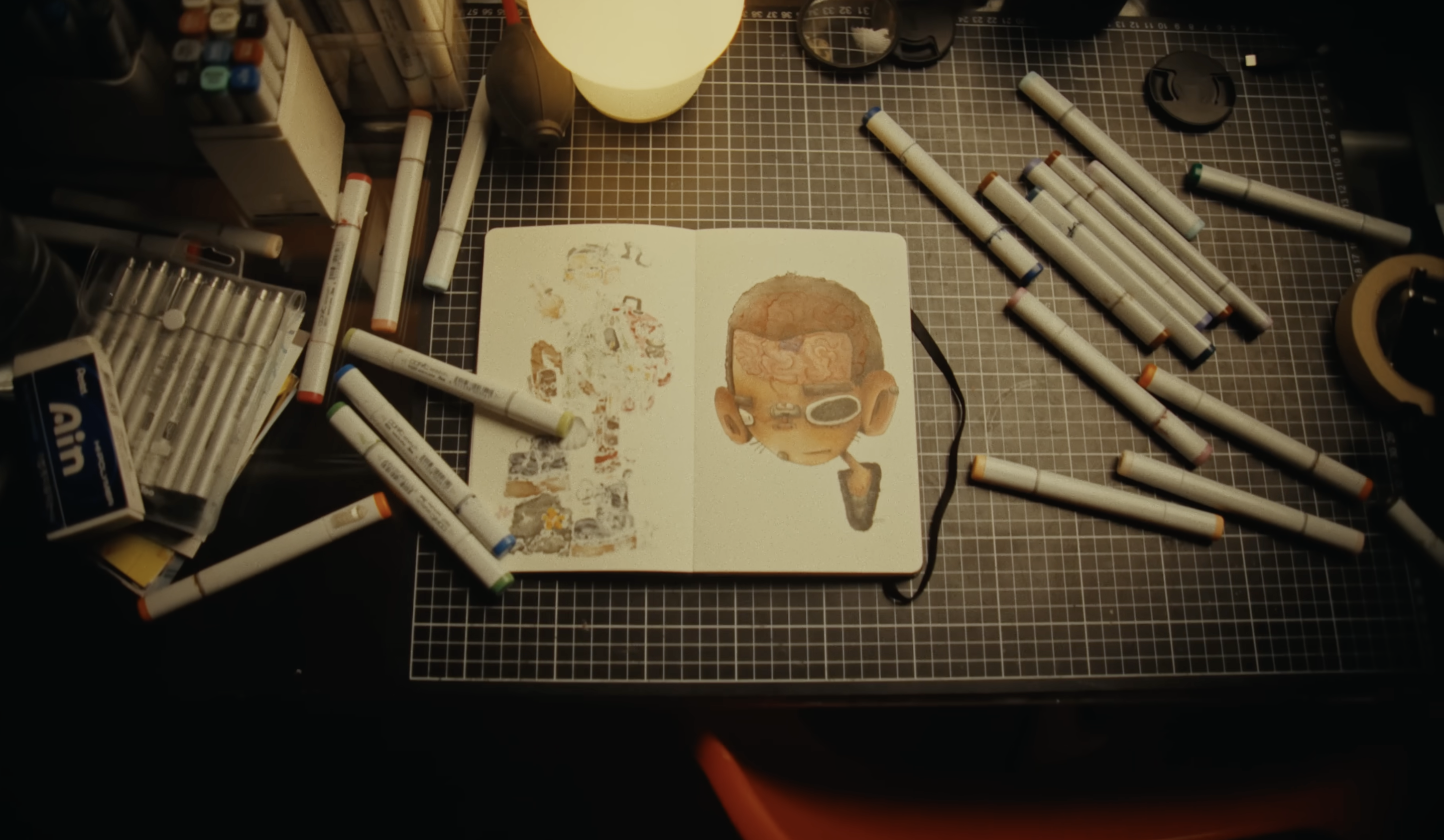
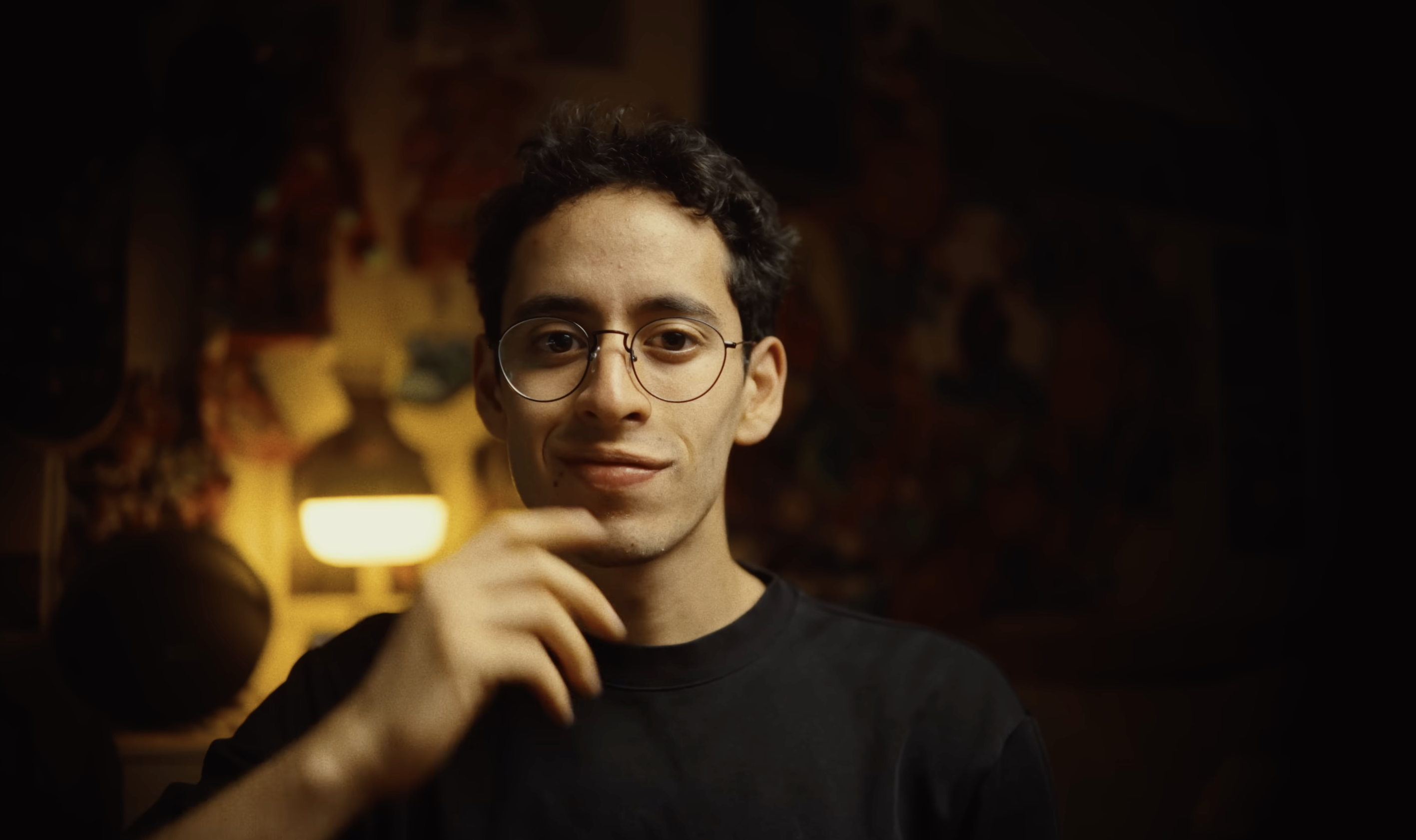
Absolut Creative Commune · Born Colourless

ERA
NAMJOSHI

Illustrator. Visual designer. Collector of things that don’t belong together.
Artist 5 of 6 — Production Bible

Shoot Date
24 – 25 Feb 2025
Location
Delhi NCR
Curator
Spryk
Production
Neofox
The Artist

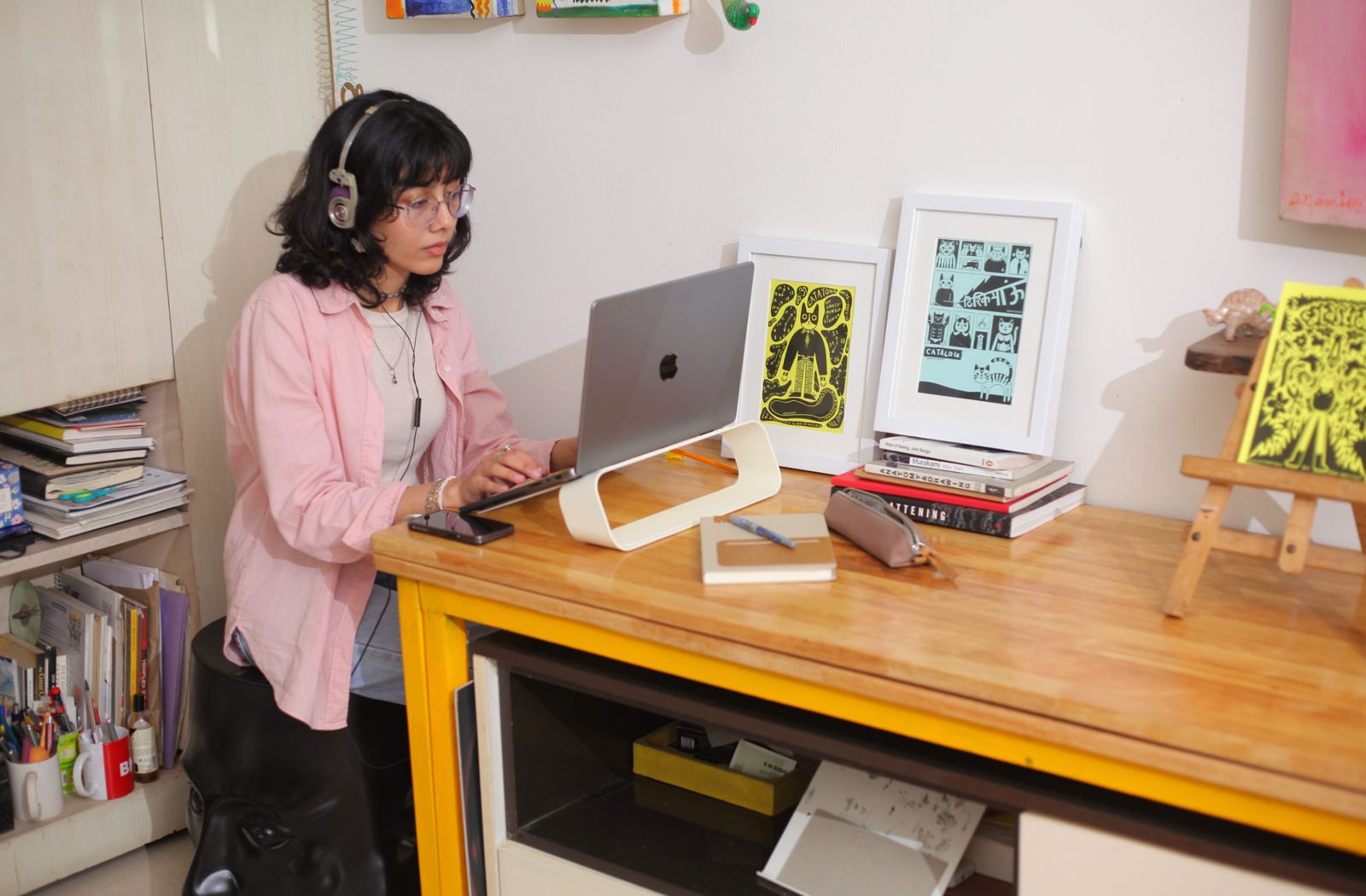
Era Namjoshi is an illustrator and visual designer based in Delhi. Her art is about the small oddities of everyday life — turning moments of chaos into patterns, symmetry into stories. She collects things that don’t belong together and finds a way to make them coexist, each element keeping its own personality while becoming part of something bigger.

From the ACC Deck

Era’s quiet, observational way of working will shape the BTS — ideas forming through pauses, small adjustments, and careful attention, allowing her inner rhythm to guide the final artwork. The process is personal, not technical. The BTS will capture moments of thought, alignment, and intuition rather than tools or techniques.

BTS Treatment Philosophy

  • Bridges artist identity → finished artwork: Ideas forming through pauses, small adjustments, and careful attention to her inner rhythm
  • Makes the process feel personal, not technical: Reflection and balance over tools and techniques
  • Born Colourless as a way of creating, not just a theme: Beginning with visual uncertainty and gradually bringing order to chaos

Creative Direction

  • Art-led, not brand-led
  • Born Colourless positioned as a creative doctrine
  • Process foregrounded over presentation
  • Measured pacing sustains tension and focus
  • Absolut as enabler of creative freedom, not a sponsor
The Studio

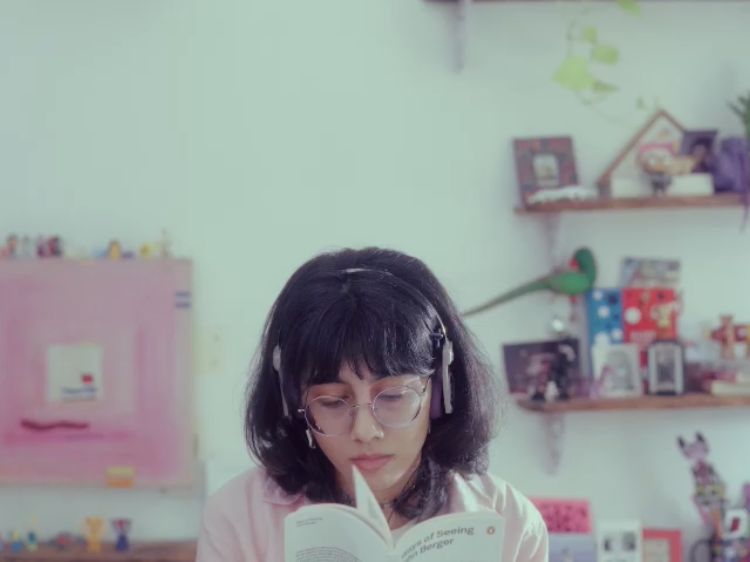
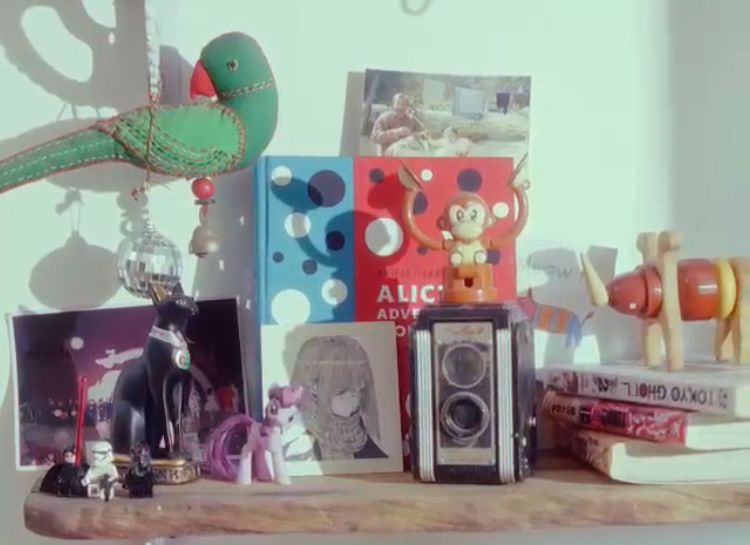
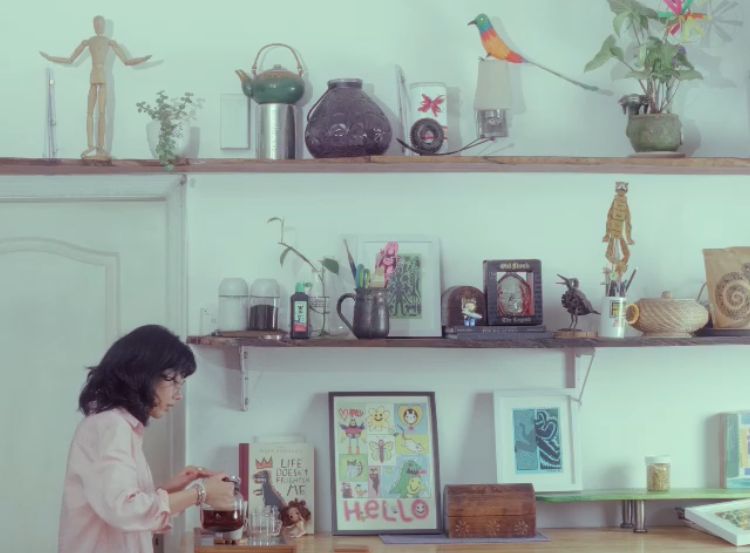
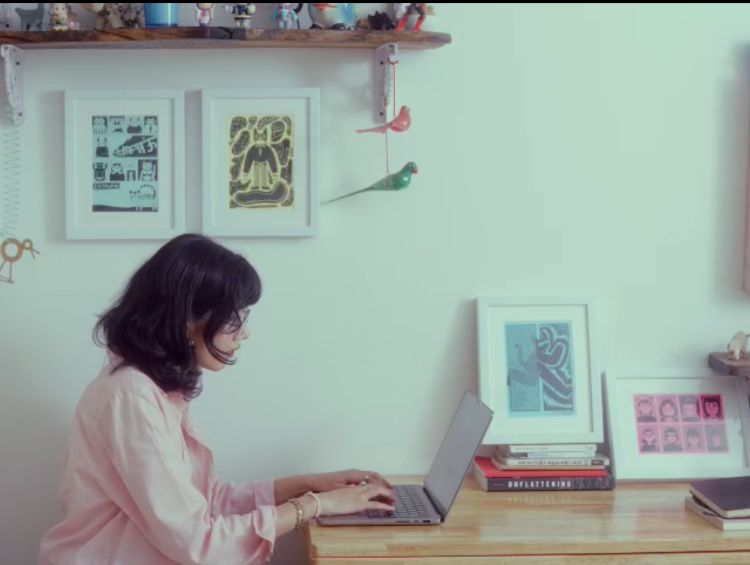
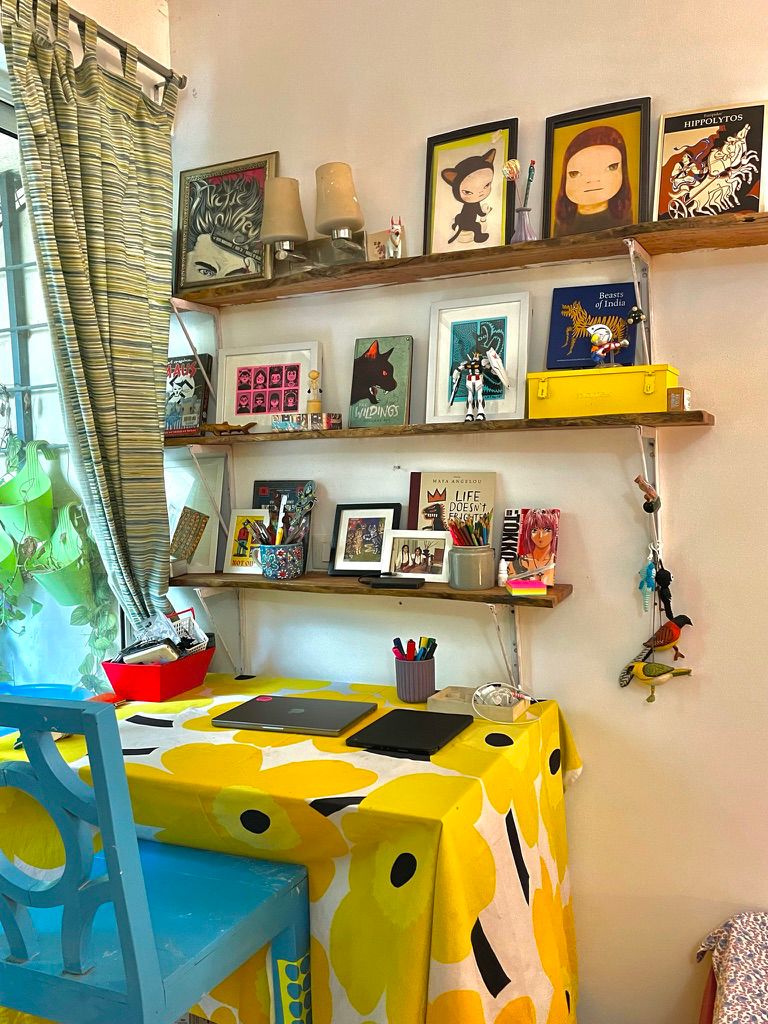
A bright, lived-in workspace in Delhi NCR. Marimekko tablecloth on the desk, four shelves packed with books and objects, a blue chair, and a large window flooding the room with natural light. Every surface carries memory — objects collected by parents, pieces gifted by friends.

What Works

  • Large window — abundant natural key light, beautiful soft quality
  • Colourful objects everywhere — built-in production design, visual richness
  • Marimekko tablecloth & blue chair — graphic colour blocking in frame

What Needs Control

  • Bright room — CONTROL existing light (opposite of Abhijit’s dark room)
  • Diffuse window for soft wrap rather than harsh directional light
  • Manage reflections from colourful surfaces — can cause unwanted colour casts

Key Objects

  • Posca markers and illustration supplies (her primary tools)
  • Objects collected by parents — Indian craft pieces
  • “Ways of Seeing” book (John Berger)
  • Yoshitomo Nara portrait on shelf
Selected Voiceover

Nine voiceover blocks forming a single narrative arc. Artist-led VO drives the film. These are Era’s words, spoken over BTS footage of her process and space.

01 The Room 02 The Process 03 Delhi 04 The Small Things 05 Colour 06 The What If Game 07 Indian Craft 08 Responsibility 09 Born Colourless
Block 01 — The Room
Reference Frames
This is where it all happens…
“Hi, I’m Era Namjoshi, and I’m an illustrator and visual designer. And this is where it all happens. Every object in this room carries a memory — things my parents collected, pieces gifted by close friends. The spaces I inhabit and the people in them have shaped me more than I realise. And that’s where my visual language comes from.”
Wide establishing — Era’s room. Camera pans across shelves of collected objects, desk with Marimekko tablecloth, blue chair. Warm natural window light. Soft, intimate.
Block 02 — The Process
Reference Frames
I never know what a piece will look like…
“I never know what a piece will look like when I begin. I deliberately find concepts that feel unfamiliar, and then I let the process guide me. The final piece reveals itself somewhere along the way.”
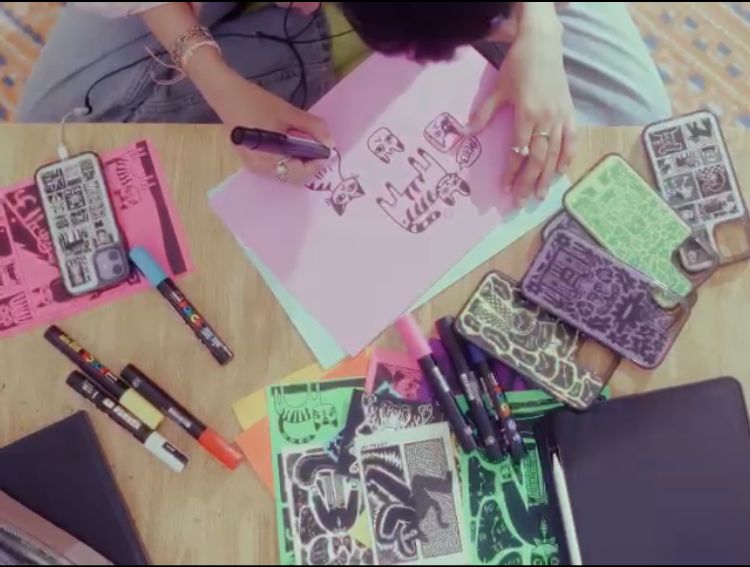
Detail shots — hands holding Posca markers, drawing on paper. Close-up of bold shapes emerging. Rack focus between marker tip and developing illustration.
Block 03 — Delhi
Delhi is chaotic…
“Delhi is chaotic. But somehow everything finds its place. It’s also such a cultural melting pot. I’m constantly absorbing new things — languages, textures, people. All of it finds its way into the work, whether I plan it or not.”
Cutaway options — Delhi street textures, colour palettes from markets. Or stay inside: Era looking out the window, city sounds filtering in. The outside world entering her work.
Block 04 — The Small Things
Reference Frames
I’m drawn to small, peculiar details…
“I’m drawn to small, peculiar details. A strange haircut. An oddly specific dog posture. Patterns of dust and scratches on glasses during an eye test. Things that don’t matter in a larger sense, but feel important to document.”
Extreme close-ups of objects on Era’s desk and shelves. Small curiosities. Shallow DOF. Her eyes noticing details. The camera mimicking her gaze — finding the small, the peculiar.
Block 05 — Colour
For most of school and college…
“For most of school and college, I worked almost entirely in black and white. Then after COVID, colour just took over. I think I replaced the white with colour and kept everything else. The black was always going to stay.”
Split visual — black and white sketches on one side, then explosion of colour as she adds Posca marker strokes. The transition from monochrome to polychrome. Bold, graphic.
Block 06 — The What If Game
When I’m bored, I play a game…
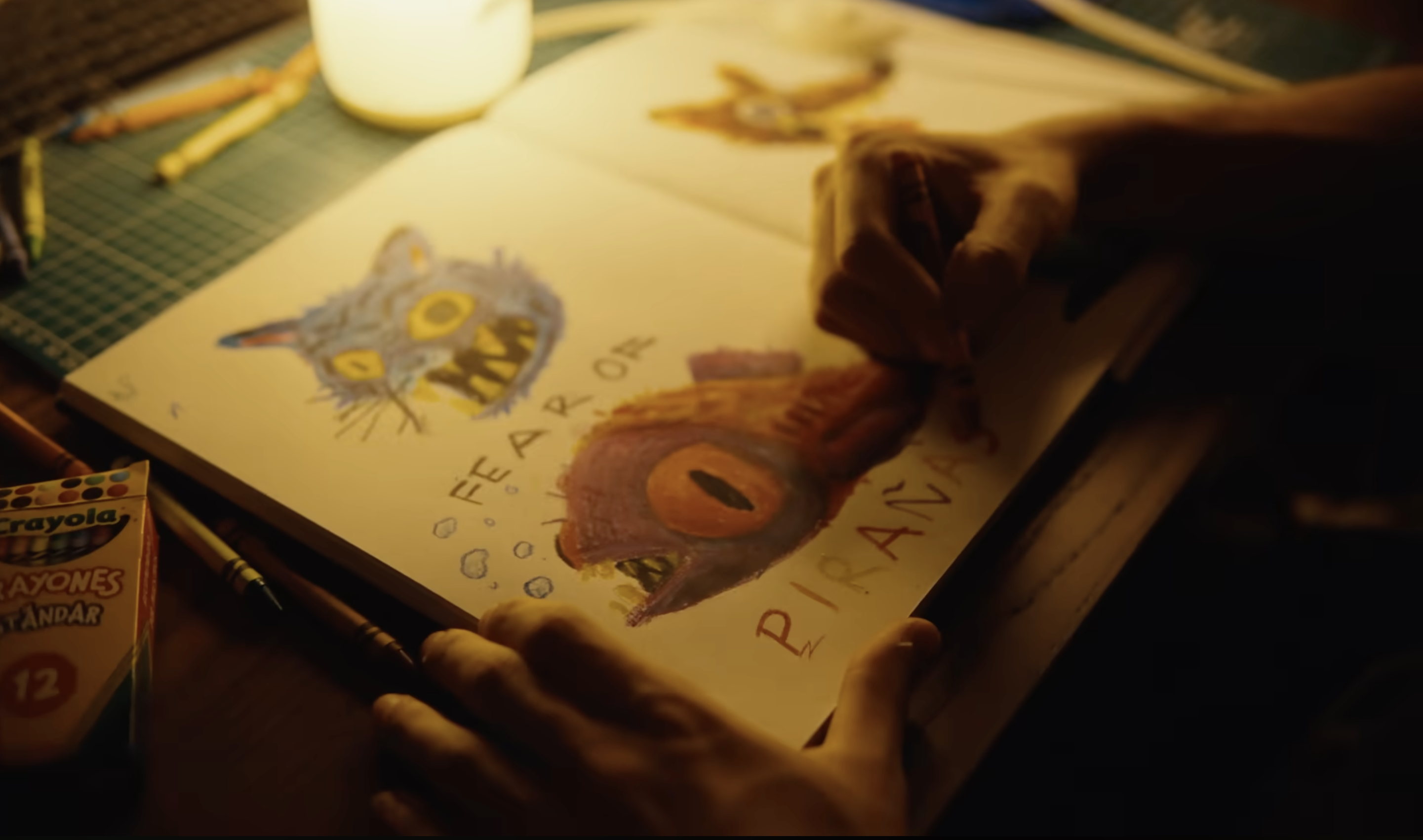
“When I’m bored, I play a game. What if a cat was a spider? What if a duck wore a tuxedo? What if there were trapeze-artist cats in a circus? If something excites me enough, I write it down — and then I draw it.”
Era flipping through sketchbook pages. Camera catches surreal illustrations — animal hybrids, impossible scenarios. Her handwriting. Quick cuts between sketches. Playful energy.
Block 07 — Indian Craft
I’m deeply inspired by India’s craft traditions…
“I’m deeply inspired by India’s craft traditions. Dhokra, Gond art, Kathputli puppetry, leather shadow puppets. There’s something in their playfulness and storytelling that I keep coming back to.”
Close-ups of Indian craft objects in Era’s collection (if present). Or detail shots of her illustrations that reference these traditions. The visual link between heritage and her contemporary work.
Block 08 — Responsibility
I once worked on a project about violence against children…
“I once worked on a project about violence against children. Representing that literally felt wrong. I had to rely entirely on metaphor and symbolism. That project deeply shifted my understanding of responsibility in visual storytelling.”
Slower pace. Era working carefully, making deliberate choices. The weight of subject matter visible in her concentration. Tight on hands, then pull back to her face. Contemplative silence.
Block 09 — Born Colourless
Born colourless…
“To me, Born Colourless means starting as yourself — without labels, without expectations — and gradually adding your own colours to the world. But at the same time we’re never truly colourless — our experiences and environments shape us constantly. The meaning evolved for me. It became less about absence, and more about becoming.”
Final piece appearing under her hands. Pull back to full room. Era leaning back, looking at what she’s made. Hold. Window light shifting. Colour everywhere. End.
Conversation Structure

Seven segments for a 20–30 minute long-form conversation. Aim longer during recording — cut in post. Host drives the conversation with questions; cue points signal key moments for the editor.

1
A Room Where Things Collide
0:00 – 4:00
Open in the space. Ground the conversation in the physical room — the shelves, the objects, the desk. Let Era describe her world and the things she’s collected before you ask about the work.
  • Q1 So we’re sitting in your room right now. Tell me about this space — what are we looking at?
  • Q2 I can see a lot of objects here — things that feel like they’ve been collected over time. What’s the story behind them?
[CUE] Transition when she picks up or points to a specific object that has a story
[HOST NOTE] Let her physically interact with objects. Don’t rush past descriptions.
2
Growing Up in the Mix
4:00 – 8:00
Dig into the personal story. Growing up, the path that led to illustration. Not a CV recitation — the emotional truth of the journey.
  • Q3 You grew up around a lot of different influences. What shaped the way you see the world?
  • Q4 Was there a moment growing up where you realised that art was going to be your thing — not just a hobby?
  • Q5 Did you always draw? Or did illustration come later, after trying other things?
[CUE] Listen for “mix” or “collision” language — bridge to next segment
3
Subcultures as Remix Labs
8:00 – 12:00
Explore Era’s fascination with subcultures, the way she absorbs and remixes influences. The creative space between worlds.
  • Q6 You’ve talked about being fascinated by subcultures. What draws you to them?
  • Q7 How do those subcultures end up in your work? Is it conscious or does it just happen?
  • Q8 Is there a subculture or community that’s shaped your art more than others?
  • Q9 When you look at your work, can you point to something and say “that came from there”?
[CUE] Let references to mixing and collision flow naturally into craft discussion
[HOST NOTE] This segment is the conceptual core. Let silence land. Don’t fill gaps.
4
The Craft of Collision
12:00 – 16:00
Get into how she actually works. The “what if” game, the Posca markers, the process of illustration. Not the tools — the mental process.
  • Q10 Walk me through how a piece starts. You’ve talked about playing a “what if” game — what does that actually look like?
  • Q11 Your work has this incredible balance between chaos and symmetry. How do you hold both?
  • Q12 When does a piece become yours? At what point do you know it’s working?
[VISUAL CUE] If recording desk: have her pick up markers and narrate in real-time
5
Objects, Memory and Inherited Language
16:00 – 20:00
The role of objects, Indian craft traditions, inherited visual language. How the past enters the present work.
  • Q13 You’ve mentioned being deeply inspired by Indian craft traditions — Dhokra, Gond art, puppetry. What is it about them that pulls you in?
  • Q14 There are objects in this room that your parents collected. Do they carry meaning into your work, even indirectly?
  • Q15 Is there a tension between honouring tradition and making something new?
[HOST NOTE] Don’t let this feel like a heritage lecture. Treat the traditions as living influences, not museum pieces.
6
Born Colourless: The Ultimate Mix
20:00 – 25:00
Bring the conversation to the Absolut Creative Commune artwork. What is it, where did it come from, what does Born Colourless mean through this specific work.
  • Q16 Let’s talk about the piece you’re making for Absolut Creative Commune. What can you tell us?
  • Q17 When you got the brief — “Born Colourless” — what was your first instinct?
  • Q18 You’ve said “Born Colourless means starting as yourself — without labels — and gradually adding your own colours.” Has the meaning shifted for you as you’ve worked on this piece?
  • Q19 How does this piece connect to everything we’ve been talking about — the room, the objects, the collisions?
[HOST NOTE] Don’t let this feel like a brand segment. Treat the ACC piece as part of her artistic arc, not a campaign deliverable.
7
Protecting the Collision
25:00 – 30:00
Reflective close. Future, legacy, what stays when the work is done. End on something personal, not promotional.
  • Q20 When you look at a finished piece — when it’s done, it’s out there — what stays with you?
  • Q21 If someone sees your work for the first time — no context, no caption — what do you hope they feel?
  • Q22 You once said that after a project about violence against children, you shifted your understanding of responsibility. How does that sit with you now?
  • Q23 Last question. You’re sitting in this room, surrounded by all of this. What’s next?
[CUE] Let the last answer breathe. Hold 3–5 seconds of silence before closing.
[HOST NOTE] Resist summarizing. Don’t wrap with a bow. Her last line IS the ending.
Reference Analysis

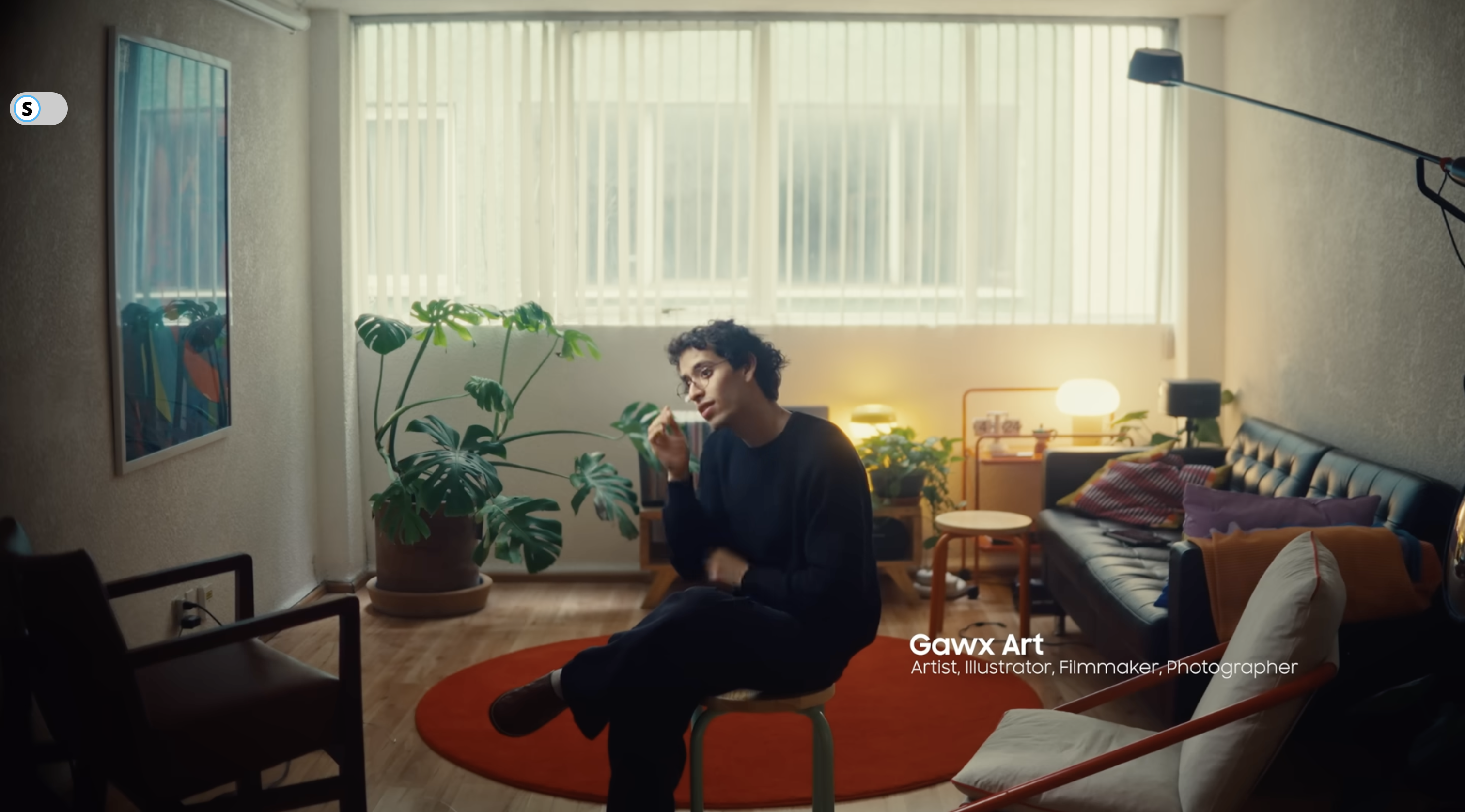
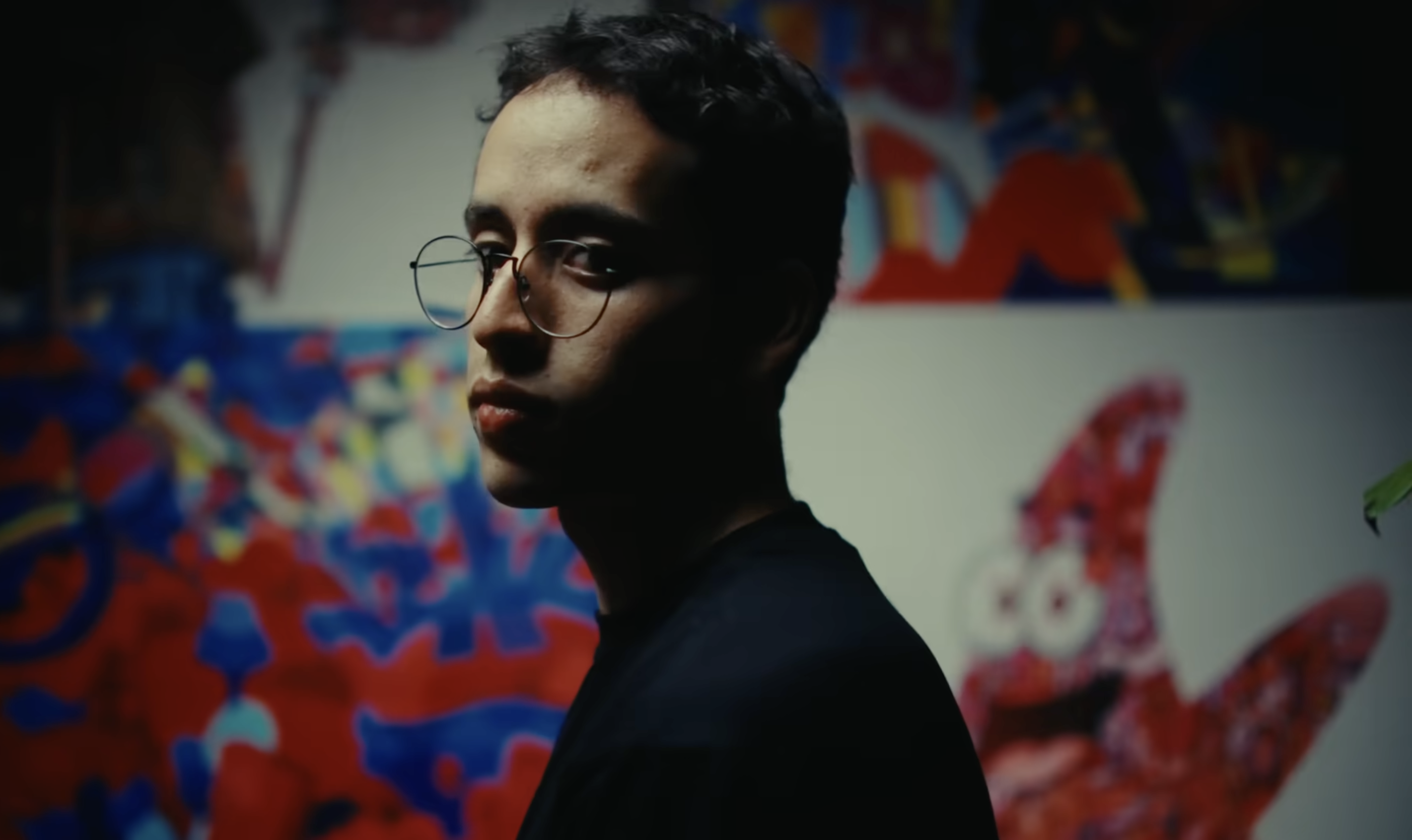
The Gawx Art x Samsung film alternates between two distinct lighting moods: warm amber studio scenes and cool blue/cyan creative sequences. Here are the key observations adapted for Era’s bright, colourful workspace.

Mood A — Warm Studio / Golden Hour

Frame: Desk Process

Window key from right/behind. Warm amber fill bounced off wall. Posca markers and bold shapes emerging on paper. Shallow DOF on hands. The Marimekko tablecloth adds graphic colour blocking to frame.

Frame: Interview Close-Up

Soft window key on face, diffused through curtain/sheet. Shelves of colourful objects in background as bokeh. Edge light separating hair. Natural, warm. Era’s room provides built-in production design.

Frame: Detail B-Roll

Extreme close-ups at f/2.0. Indian craft objects, books, Posca markers lit from side with warm practicals. Background dissolves into swirly bokeh. Every object is a character.

Mood B — Cool Blue / Creative Mode

Frame: Creative Sequence

Window diffused/controlled. Blue/cyan RGB lighting. Deeply saturated electric blue on face. Teal/cyan separation in background. Era’s colourful illustrations contrast dramatically under blue light.

Frame: Art Reveal

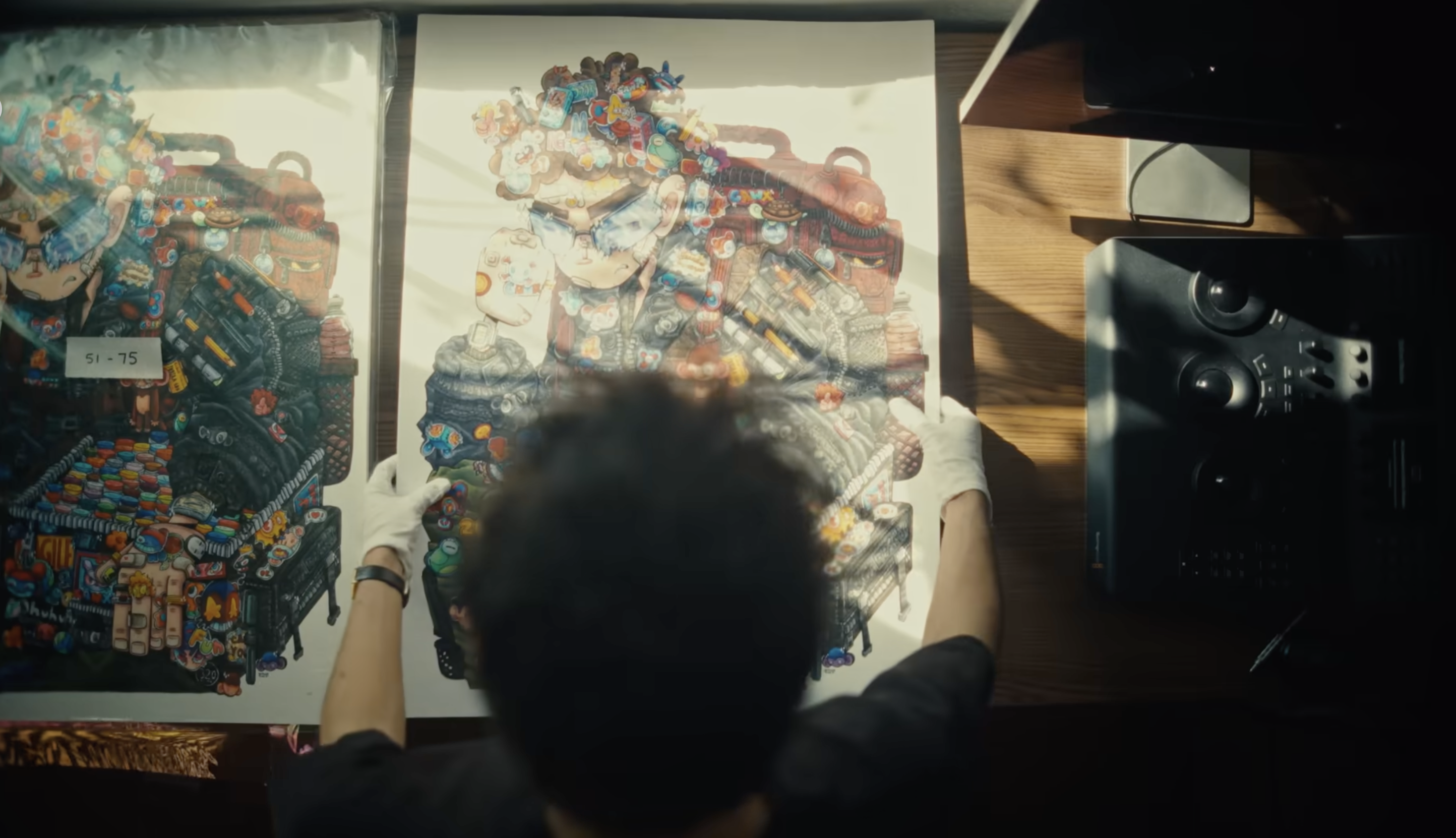
Era holds up illustration. Dramatic side key in blue. Magenta/purple edge light on opposite shoulder. The bold graphic shapes of her art pop against the moody lighting.

Frame: Object Close-Ups

Tight macro on collected objects and craft pieces with split blue/warm lighting. Objects become sculptural. Mixed colour temperature LEDs create bokeh variety against her packed shelves.

Key Observations

Light Control (Not Addition)

Era’s bright room is the opposite of a dark studio. The challenge is CONTROLLING existing light, not adding it. Diffuse the window for soft wrap. Use negative fill (dark card) to create shadows where needed.

Color Grade

Teal pushed into shadows, orange/amber in highlights. Classic teal-orange cinematic grade but done subtly. Grain and halation added in post. Preserve the richness of Era’s colourful objects.

Colour Cast Management

Era’s room is full of colourful surfaces that can bounce unwanted colour casts onto her face. Watch for reflections from the Marimekko tablecloth and shelf objects. Use negative fill to block stray colour.

Built-In Production Design

Unlike darker studios, Era’s room IS the production design. Every shelf, object, and surface tells her story. Frame to include these elements as context. The visual richness is already there — don’t fight it.

Era’s Studio

A bright, colourful workspace in Delhi NCR with a large window, four packed bookshelves, a desk with Marimekko tablecloth, and a blue chair. Every surface carries memory and visual richness.

Key Asset: Window

Large window providing abundant natural light. This is your primary key light for warm setups. Unlike a dark studio, you need to CONTROL this light — diffuse for soft wrap, flag for shadows. Can be dimmed with sheer fabric but doesn’t need blackout for most shots.

Key Asset: Shelves & Objects

Four bookshelves packed with books, collected objects, Indian craft pieces, and gifts from friends. These are your hero B-roll subjects. Light them individually with small LEDs for dramatic close-ups. At wide apertures they become beautiful, colourful bokeh.

Layout: Desk + Blue Chair

Desk with Marimekko tablecloth provides graphic colour blocking in frame. Blue chair adds a strong design element. Subject sits at desk with Posca markers and paper. The tablecloth pattern and chair create visual anchors unique to Era’s space.

Challenge: Bright Room

Bright room with natural light everywhere — opposite of a dark studio. White/light walls bounce light, reducing contrast. Use negative fill (black card/fabric on fill side) to carve shadows. Flag the window to shape the light. Embrace the brightness for warm scenes, control it for mood.

Lighting Setups

Two 100W Digitek RGB LEDs, one RGB Stick Light, two small 10cm LEDs, and the window. Era’s bright room means CONTROLLING light rather than adding it. Here’s exactly how to use each one.

A

Warm Studio / Interview Mode

For: talking head, desk work, illustration process shots, interview

Window
Key Light (Natural — Diffused)

Primary key light. DIFFUSE with white sheet or sheer curtain to soften the abundant natural light into a beautiful soft wrap. Control with negative fill (black card) on opposite side to create shadows.

● LIGHT: 5200–5600K natural (diffused)
📷 CAM WB: 4800K — captures slightly cool, warm in post
Digitek 100W #1
Fill / Bounce Light

Camera-left, bounced off wall at 30–40% power. In Era’s bright room, you need LESS fill than a dark studio. Set to warm white. Keep soft and indirect.

● LIGHT: 3200K — Warm White
📷 CAM WB: 4800K — lets warm fill read naturally golden
Digitek 100W #2
Background / Hair Light

Behind Era, aimed at bookshelves to illuminate objects. Creates rim/edge separation. Deep warm amber at 25% power. Adds cinematic glow to the packed shelves behind her.

● LIGHT: 2700K — Deep Amber
📷 CAM WB: 4800K — amber reads rich and cinematic
RGB Stick Light
Accent / Edge Kicker

Hidden behind shelf or beside blue chair, aimed at shoulder/hair from behind. Edge separation for cinematic depth. Warm amber at 20% power.

● LIGHT: 3000K — Amber
📷 CAM WB: 4800K
Small LED #1
Practical Accent

Near bookshelves to illuminate craft objects and books from below. Creates depth and visual interest in background. Low power (15–20%). Creates bokeh orbs at wide apertures.

● LIGHT: 2700K — Warm
📷 CAM WB: 4800K
Small LED #2
Desk Surface Fill

On desk surface near markers/illustration supplies. Adds warmth to the hands-at-work shots. Creates natural fill on the Marimekko tablecloth surface.

● LIGHT: 4500K — Neutral
📷 CAM WB: 4800K — reads as slight cool kiss, very natural

💡 Bright Room Strategy: Unlike a dark studio where you ADD light, Era’s room needs light CONTROLLED. The window provides your key; the LEDs add accent and mood rather than illumination. Use negative fill (black card/fabric) on the fill side to create the shadow depth the reference has. Without negative fill, the bright room will look flat.

Setup A: Warm Studio — Floor Plan

BACK WALL (SHELVES) FRONT WALL (DOOR SIDE) WINDOW (DIFFUSED) DOOR DESK + MARIMEKKO TABLECLOTH BOOKSHELVES (4 UNITS) — OBJECTS, CRAFT, BOOKS BLUE CHAIR NEG FILL ERA SUBJECT CAMERA WB: 4800K L1 100W #1 — FILL 3200K Warm · Bounced L2 100W #2 — BACKGROUND 2700K Amber · At shelves STICK — EDGE 3000K · Behind chair LED 2700K (in shelf) LED 4500K (desk) LEGEND Digitek 100W LED Panel (x2) Digitek RGB Stick Light Small 10cm LED (x2) Window Light (diffused) Negative Fill (black card)
B

Cool Blue / Creative Mode

For: stylized creative sequences, art reveals, object close-ups, transitions

Window
Reduce / Control

Cover with dark blanket or heavy curtain. Reduce daylight to near zero so you control the light. Some ambient bleed is acceptable — total blackout less critical than in a dark room.

● BLOCKED / REDUCED
📷 CAM WB: 3200K — makes everything shift cooler/bluer
Digitek 100W #1
Key Light — Blue

Camera-right, slightly above eye level. Set RGB Blue (R:30 G:80 B:255) at 70% power. Creates the dominant blue wash on Era’s face. Her colourful illustrations become dramatic under this light.

● LIGHT: RGB Blue (7500K+)
📷 CAM WB: 3200K — amplifies blue, deeply saturated
Digitek 100W #2
Background — Cyan/Teal

Aimed at bookshelves behind Era. Set to cyan (R:0 G:200 B:180) at 40% power. The packed shelves become a moody, textured backdrop under teal light.

● LIGHT: RGB Cyan/Teal
📷 CAM WB: 3200K — teal shifts cooler, adds depth
RGB Stick Light
Edge Light — Magenta/Purple

Behind Era on opposite side of key. Magenta/purple edge on hair and shoulders (R:180 G:0 B:200) at 25%. Adds triadic colour depth seen in the reference.

● LIGHT: RGB Magenta
📷 CAM WB: 3200K
Small LEDs (Both)
Practical Accents

Hide among bookshelves. One blue, one warm amber. Creates tiny points of light in background that become beautiful bokeh orbs at wide apertures. The colourful shelf objects catch the light differently.

● LIGHT: RGB Blue + Amber mix

💡 Why 3200K Camera WB for cool scenes: Setting the camera to tungsten WB (3200K) when using blue RGB lights makes the blues look deeply saturated and electric. The camera “expects” warm light, so cool light looks dramatically blue. Standard trick for the rich blue look seen in music videos and creative films.

Setup B: Cool Blue — Floor Plan

BACK WALL (SHELVES) FRONT WALL (DOOR SIDE) BLOCKED OUT DOOR DESK SHELVES CHAIR ERA SUBJECT CAMERA WB: 3200K L1 100W #1 — KEY BLUE RGB Blue · 70% · Cam-right L2 100W #2 — BG CYAN RGB Teal · 40% · At shelves STICK EDGE Magenta · Behind LED Blue (shelf) LED Amber (shelf) LEGEND 100W #1 — RGB Blue Key 100W #2 — RGB Cyan BG Stick — Magenta Edge Small LED — Blue Small LED — Amber Blocked Out Window
C

Overhead Desk / Process Shots

For: top-down of hands drawing, Posca markers on paper, illustration process

Digitek 100W #1
Main Top-Down Light

Mount overhead or high stand aimed down at desk. Slightly off-center for soft directional shadows on the illustration. Diffuse with white sheet. 50% power (bright room needs less).

● LIGHT: 4000K — Neutral Warm
📷 CAM WB: 4000K — neutral match
Digitek 100W #2
Side Fill

At desk level, aimed across surface. Adds dimension to markers and paper, prevents flat look from single overhead. Low power (20%).

● LIGHT: 3500K — Warm
📷 CAM WB: 4000K
Window
Natural Fill (Diffused)

Window provides beautiful natural fill on the desk surface. The Marimekko tablecloth adds colour and warmth to the composition. Let it spill naturally.

● LIGHT: 5200K — Daylight
📷 CAM WB: 4000K — daylight reads as slight cool accent

⚠ Critical: Curate the desk surface. Keep Posca markers (arranged by colour), one sheet of paper/illustration in progress, sketchbook, and reference objects. The Marimekko tablecloth provides the base pattern. Remove water bottles, random papers, loose items. Every object in frame should feel intentional and reveal Era’s process.

Setup C: Overhead Desk — Top-Down View

TOP-DOWN VIEW — DESK SURFACE (MARIMEKKO TABLECLOTH) ILLUSTRATION IN PROGRESS POSCA MARKERS SKETCHBOOK REF OBJ L1 OVERHEAD 4000K · 50% L2 SIDE FILL 3500K · 20% WINDOW 5200K natural CAM TOP-DOWN
Color Treatment

Target Palette

Warm White #f5f0e8
Amber #d4a054
Posca Red #e85d3a
Cobalt #2B27EE
Blue Key #3366aa
Leaf Green #2d8a5e
Skin #e8c88a
Deep Teal #1a3d5c

Warm Scenes Grade

Lift: Shadows toward warm brown (+5 red, +3 green). Do NOT crush — Era’s bright room has open shadows.
Gamma: Slightly warm, gentle. Preserve natural daylight feel.
Gain: Highlights toward golden amber (+6 red, +4 green).
Saturation: 90% global. Boost warm tones selectively. Let Posca marker colours POP through — they are part of the story.
Contrast: Medium-low contrast. Open shadows (10–15 IRE). Gentle filmic roll-off. Avoid crushing blacks — the bright room should feel airy.

Cool Scenes Grade

Lift: Heavy blue (+15 to +20 blue).
Gamma: Push toward cyan/teal.
Gain: Keep neutral or slightly cool.
Saturation: 75–80% global. Boost blues/cyans. Desat warm tones.
Contrast: Higher contrast than warm. Deeper blacks for drama. This is Era’s “what if” visual space — surreal, not literal.

Camera Settings Summary

Profile: LOG or flat/CineStyle if available.
WB Warm: 4800K (bakes in warm mood, cool window contrast).
WB Cool: 3200K (amplifies all blues dramatically).
WB Desk: 4000K (neutral true-to-life — critical for accurate marker/illustration colours).
ISO: 400–800 for bright room. Lower than dark rooms — more light available.
Shutter: 1/48 or 1/50 for 24fps. 180° rule.

Finishing Touches

Grain: Subtle 35mm fine grain in post for texture.
Halation: Very subtle bloom on highlights — especially on bright window light.
Vignette: Light (−0.2 to −0.4) to draw eyes centre. Less than dark rooms.
Sharpening: Minimal. Preserve soft, handmade quality that matches Era’s illustration aesthetic.

Lens Guide

The reference uses extremely shallow depth of field throughout. You have the legendary Helios in-house — this is your hero lens. For Era, the Helios bokeh turns colourful Posca work and illustrated objects into dreamlike swirls.

HELIOS 44-2

58mm f/2.0 — Soviet Vintage Prime — M42 Mount

IN-HOUSE HERO LENS

Your hero lens for this shoot. The Helios 44-2 is famous for its signature swirly bokeh — background highlights twist into spiral shapes that add an organic, dreamlike quality impossible to replicate digitally. For Era, this is essential — the bright room with colourful shelves, illustration work, and Posca markers becomes an abstract painter’s palette through the Helios. The slight softness wide-open and natural halation at the edges perfectly match the handmade, analog aesthetic of Era’s illustration world.

58mm f/2.0 SWIRLY BOKEH M42 MOUNT MANUAL FOCUS

Talking Head / Interview

f/2.0 wide open. Era at desk or blue chair. Colourful bookshelves swirl into dreamy orbs behind. Manual focus on eyes. Camera WB: 4800K (warm) or 3200K (cool).

f/2.0 – f/2.8

Detail B-Roll

f/2.0–f/2.8. Close-ups of Posca markers, illustration in progress, sketchbook pages, shelf objects. The swirly bokeh turns bold colours into magical spirals.

f/2.0 – f/2.8

Creative / Artistic

f/2.0. Shoot through shelves or past Posca markers at Era illustrating. Edge softness and swirl adds the handcrafted, analog feel that matches Era’s work.

f/2.0

Overhead Desk

Top-down view of hands illustrating on paper with Posca markers. Stop down slightly for sharpness on hands and illustration while desk pattern (Marimekko tablecloth) dissolves.

f/2.8 – f/4.0

PRO TIP: The Helios is manual focus only (M42 mount + adapter). Use focus peaking on your camera. For interviews, mark focus distance with tape on the floor. For overhead desk shots, the manual focus is your friend — rack focus from Era’s hands to the illustration emerging on paper. The analog lens for an analog artist. Pair with the warm palette for pure magic.

Supplementary Lenses

35mm f/1.4–1.8

Wider establishing shots of full room and bookshelves. Captures the colourful, bright room context. Use for walking shots and room reveals. f/1.4–2.0

85mm f/1.8

Extreme compression for detail shots of illustration work, markers, and shelf objects from across the room. Background completely dissolves. f/1.8

24mm f/1.4–2.8

Full room reveal shot showing all four bookshelves, desk area, and blue chair. Use sparingly — one or two establishing shots for context. f/2.8

Helios Shooting Strategy

Plan 70–80% of shots around the Helios. The 58mm on full-frame (or ~87mm equivalent on APS-C) is perfect for desk shots, talking head, and illustration B-roll. Its swirly bokeh gives the film a unique visual fingerprint — colourful Posca markers and illustrated objects become abstract art through the Helios. Shoot wide open at f/2.0 for max character; f/2.8 for a touch more sharpness on illustration detail.

APS-C Crop Factor Note

If your camera body is APS-C (not full-frame), the Helios 58mm will behave like ~87mm equivalent. This is actually ideal — it becomes a portrait/telephoto that gives extreme compression and even more pronounced swirly bokeh. Just step back a little for medium shots. Tighter framing helps isolate Era against the busy, colourful background and makes the space feel curated rather than cluttered.

Camera Settings

Technical

  • Profile: LOG or flat/CineStyle
  • Frame Rate: 23.976 fps
  • Shutter: 1/48 or 1/50 (180° rule)
  • ISO: 400–800 for bright room. Lower ISO = cleaner image.

Post-Production

  • Grain: Subtle 35mm fine grain for analog texture
  • Halation: Subtle bloom on bright window light
  • Vignette: Light (−0.2 to −0.4)
  • Sharpening: Minimal. Preserve the handmade, soft quality.
Shot List & Schedule

Structured to minimize lighting changes. Era’s bright room gives more flexibility — start with natural light, supplement as needed, then go full RGB for creative block.

1

Natural Light Interview (Setup A)

Interview/talking head with diffused window key. Medium and wide shots at desk and blue chair. Process footage of illustration work. Use negative fill to shape light. 58mm Helios hero. Camera WB: 4800K.

4800K
2

Overhead Desk / Process Shots (Setup C)

While natural light available as fill. Curate desk: Posca markers, illustration in progress on Marimekko tablecloth, sketchbook. Top-down B-roll of hands drawing. 35mm or 58mm from above. Camera WB: 4000K.

4000K
3

Detail B-Roll (Setup A Modified)

Posca marker close-ups, illustration details, shelf objects, sketchbook pages, hands selecting colours. 85mm or 58mm wide open for extreme bokeh. Small LEDs to accent individual objects. Camera WB: 4800K.

4800K
4

Blue / RGB Creative Sequence (Setup B)

Reduce window light (curtain/diffusion). Switch to RGB. Stylised creative sequence — Era holding up illustration, bold shapes lit in blue/magenta. The “what if” visual space. Most produced block. Take your time. Camera WB: 3200K.

3200K
5

Window Light Portraits & Transitions

Soft window light portraits of Era in profile, looking out. Hands at work with illustration silhouetted against bright window. Powerful opening/closing shots. The bright room IS the character here. Camera WB: 5600K.

5600K

📌 Final Reminder

Bright room strategy: you control light rather than add it. Use negative fill (black card/cloth) to create shadows and shape. Turn off overhead lights — rely only on window + controlled sources. The challenge is subtractive: sculpt with darkness in a naturally lit space. Let the objects and colours in Era’s world do the visual storytelling.

Production Notes

Workspace Logistics

  • Bright studio room — window provides strong natural light
  • 4 bookshelves along back wall filled with art/books/objects
  • Desk near window with Marimekko tablecloth
  • Blue upholstered chair — secondary interview position
  • Negative fill essential — bring black card/cloth for subtractive lighting

Equipment On-Set

  • 2× Digitek 100W RGB LED panels
  • 1× RGB stick light
  • 2× Small 10cm LED panels
  • Helios 44-2 (58mm f/2.0) + adapter
  • Black card / negative fill + curtain/diffusion for window control

Key Objects to Feature

  • Posca markers — Era’s primary medium, bold colours
  • Illustration work in progress on paper
  • Sketchbooks and early drawings
  • Indian craft references (Dhokra, Gond, Kathputli, leather shadow puppets)
  • Marimekko tablecloth — visual signature of the desk

Critical Reminders

  • Turn ALL overhead lights OFF
  • Bright room = subtractive approach. Use negative fill to sculpt.
  • Shallow DOF (f/2.0–f/2.8) to control busy background
  • Curate desk before overhead shots — this IS the process story
  • Treat Born Colourless as doctrine, not tagline